Mudgee Property Management Monthly Newsletter
February 2026
Greetings from Stacey’s Desk
We are pleased to see so many of our landlords engaging with our newsletter content and following us across our social media platforms. Our socials provide additional value beyond this newsletter, including short tenant instruction videos, landlord guidance, and local market updates. We also enjoy creating this content and sharing more of who we are and how we work. If you are not already following us online, please click the links below to stay connected.
We would also like to remind you of our referral incentive. Any landlord who recommends our services to a friend or family member is eligible for a commission-free period as a thank-you. One of our Lithgow landlords has already taken advantage of this in January and will receive a New Year bonus. We genuinely value referrals from clients who know and trust our service, and we believe that support should be recognised and rewarded.
Energy, opportunity and community - all in one big day
Our McGrath Central Tablelands super auction event is just around the corner! Explore 30+ properties, all going to auction in one place, on one day, and enjoy the buzz alongside locals, buyers, and neighbours. Join us for the action, plus a charity BBQ and auction supporting RUN DIPG, raising funds for childhood brain cancer research. We’d love to see you there and share the spirit of our Central Tablelands Friday Frenzy!
When: Friday 6th February 2026
Where: Mudgee Team Training Village. 62 Putta Bucca Road, Mudgee NSW 2850
More Information: mcgrathfridayfrenzy.com.au
Video Series: Tenant & Landlord Advice
Follow us on social media to view more videos like this!
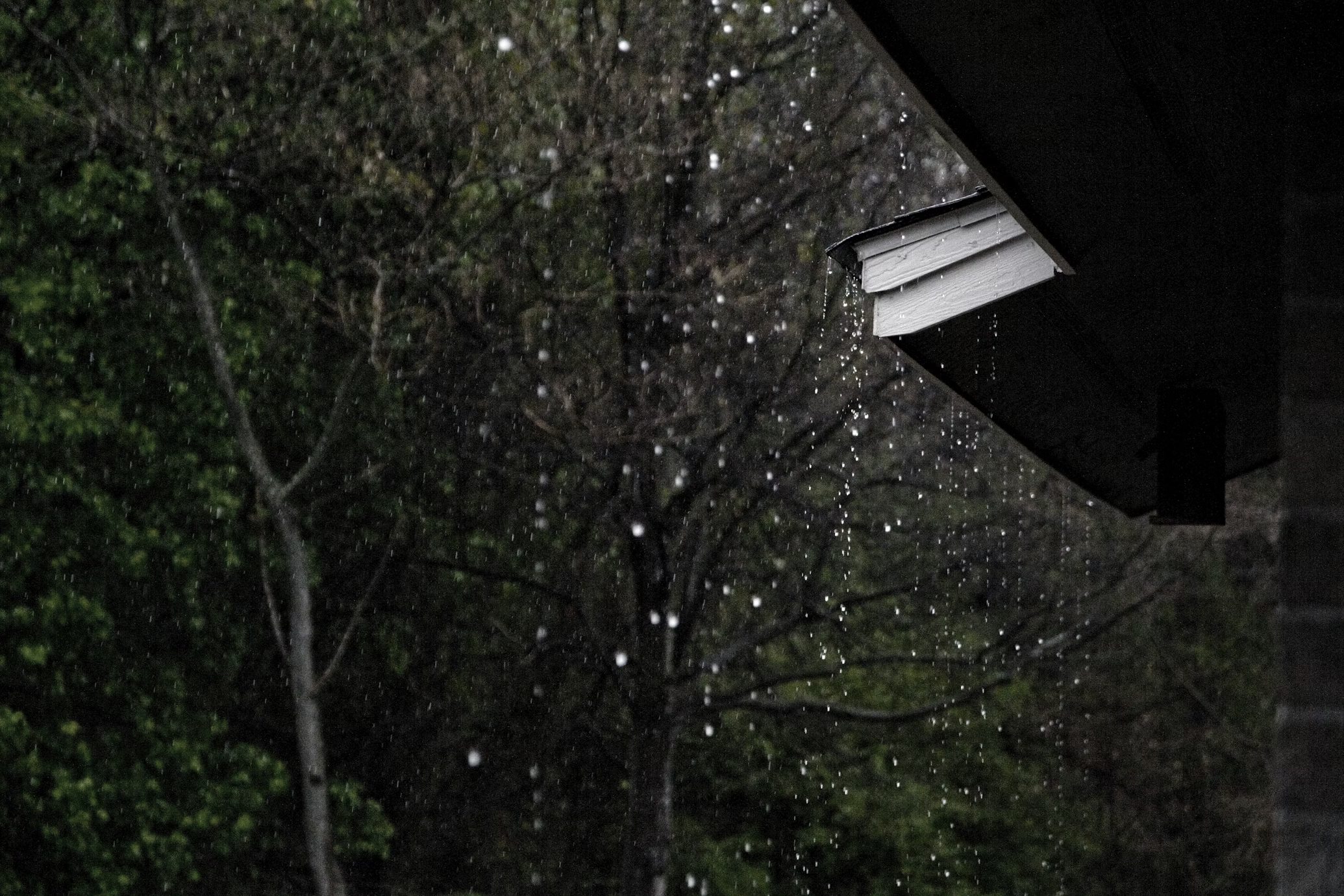
STORM SEASON
Torrential rain. Flash floods. Gale-force winds. Hail. Lightning. It is not the sunny, carefree image most people have of an Aussie summer, but from November to April, these months mark the peak of our natural disaster season.
For southern Australia, summer is peak season for bushfires and severe storms.
Severe storms can trigger flash flooding, tear roofs off buildings, and bring down trees or power lines, causing widespread damage. In fact, on average, storms account for more damage (measured by insurance claims) than tropical cyclones, earthquakes, floods, or bushfires.
While you cannot control the weather, proactive maintenance can help reduce the risk of storm damage to your investment property.
It is also a condition of most insurance policies to adequately maintain your property. If you need to make a claim after a storm, the level of upkeep can be a key factor in whether your claim is accepted. Neglected repairs could result in part or all of your claim being denied.
Below is an action plan to help you get your property ready for storm season.
Head to the top. Fix the roof.
- Get the roof checked for leaks and other damage.
- Fix any cracked, broken or displaced tiles.
- Patch or replace damaged roof sheeting.
- Have any built-up dirt removed.
- Check there are no damaged bricks or cracked joints on flues and chimneys.
- Inspect the inside of the roof space.
- Inspect the ceilings and walls for signs of leaks.
Make like a sweep. Clean gutters, downpipes and drains.
- Make sure gutters and downpipes are free of debris.
- Check for rust, holes, blockages, other damage and that gutters and downpipes are securely attached.
- Clear leaves from the valleys of the roof.
- Check drains are clear of blockages and free-flowing.
- Channel water to drain away from the property.
Channel a lumberjack. Trim trees and branches.
- Have overhanging trees and branches on your property pruned so they cannot fall on the home or power lines.
- If there are trees (not on your property, e.g. verge trees) or powerlines that may pose a threat to your property, contact your council or energy company to check them.
Grounds control. Maintain the yard and balcony.
- Repair damaged windows and doors.
- Ensure structures that could take flight in heavy winds, like pergolas, fences, roofing iron and sheds, are soundly anchored.
- Make sure any exterior structures that may be subject to storm damage are sound, such as patios and pergolas, outdoor steps and handrails, sheds, fences and decks.
- If you keep chemicals or poisons on the premises (e.g. in outdoor sheds), be sure to store them well above ground level in case of flash floods.
Be prepared. Check your insurance policy is current and adequate.
- Take out cover well in advance. Once a disaster has struck, or is imminent, it is too late to arrange cover.
- Ensure the policy is up-to-date and the level of cover, including the sums insured, are sufficient.
- Make sure the insurance policy provides cover for the types of events specific to the location of your rental, these may include flash flood, storm water runoff, associated landslip (or landslide) and damage to properties by trees.
- Understand the policy – the inclusions and any exclusions, limitations and excesses applicable. It is also important to understand how the insurer defines certain events like flooding.
- Understand the policyholder’s obligations under cover, such as the loss mitigation clauses (i.e. acting to prevent further damage or loss).
- Keep on top of property maintenance as failure to maintain the premises can void the policy or limit the payout amount.
- Prepare a property inventory (keep copies of proof of ownership off-site).
- Remind tenants that they need their own contents insurance, as your landlord insurance does not cover their possessions.
While you cannot control the weather, you can make sure you have insurance in place in the event that your rental suffers summer storm damage and you suffer losses.
Sourced from EBM insurance
Looking to add to your property portfolio?
Keep up with our latest news by following us on socials
McGrath Mudgee & Surround's Property Management Team










Manage with McGrath
Maximise your
investment potential
Maximise your investment potential. For over 30 years we have been refining the McGrath Leasing System to ensure we provide our clients with a distinct advantage.
Whether you are a first-time investor, multiple owner, or renting out your family home, our team is committed to delivering the best possible result.
Our Offices Reach Network Experience

Mudgee
79 Church Street, Mudgee NSW 2850
T: (02) 6372 2584

Rylstone
90 Louee St, Rylstone NSW 2849
T: (02) 6379 1955

Lithgow
71 Main St, Lithgow NSW 2790
T: (02) 6352 5125

Rural
79 Church Street, Mudgee NSW 2850
T: (02) 6372 2584